i.
One intrusive object.
Every scene gets one thing that shouldn't be there. A pink lion. A gold mousetrap. The room earns its stillness from the one loud choice.
Ididn't grow up calling myself an artist. I grew up in a house where everything was slightly re-arranged — my mother changed the living room every season, and I'd come home from school to a different country. By the time I was twelve, I had a specific opinion about interior design and art.
I made an apprenticeship in creative marketing, which at the time felt like a compromise between the two things in my head — the commercial one and the one that made pictures. What I actually learned was that the two things aren't separate at all. A shop is a scene. A brand is a script. A product display is a short story you can walk through.
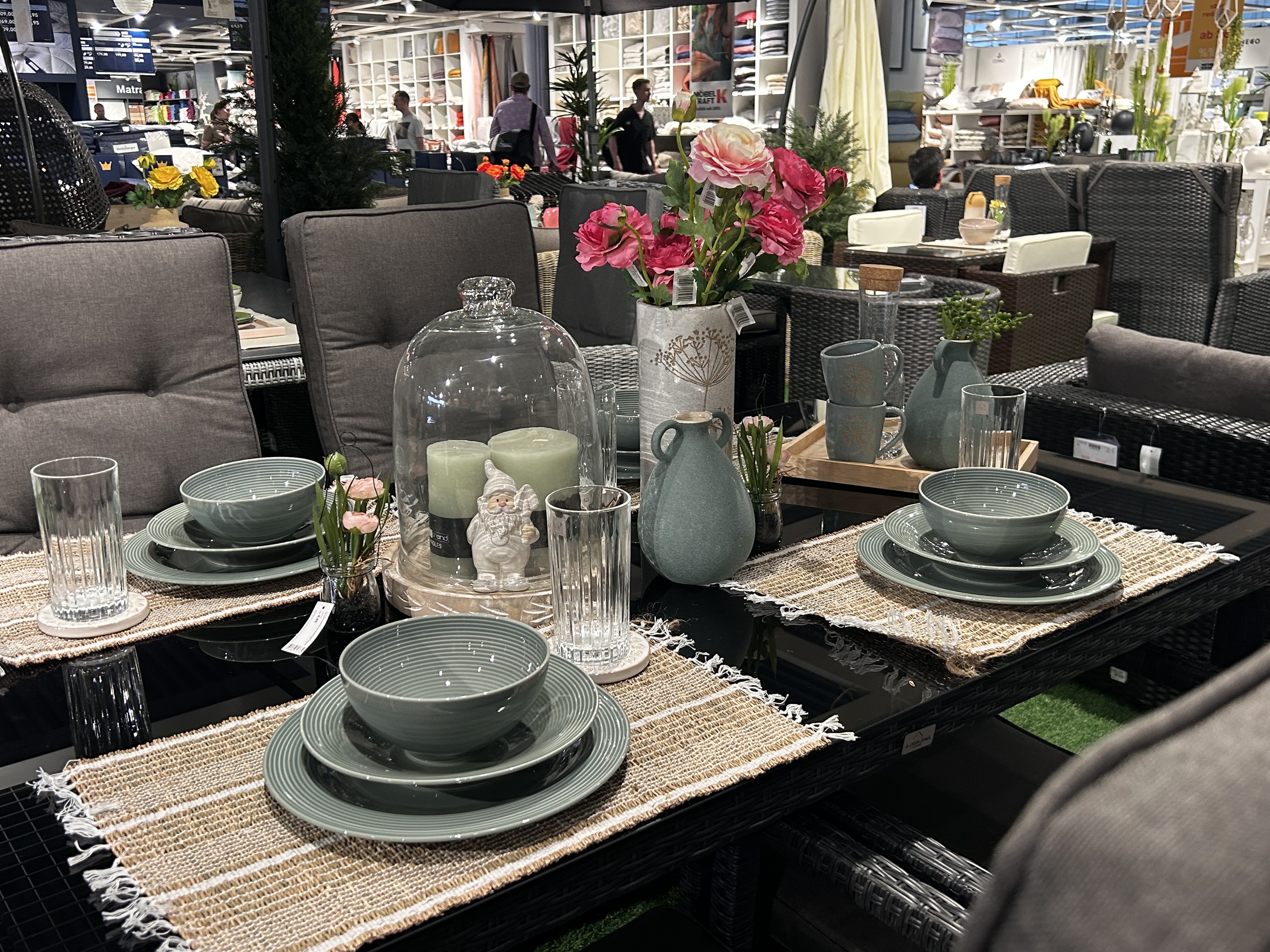
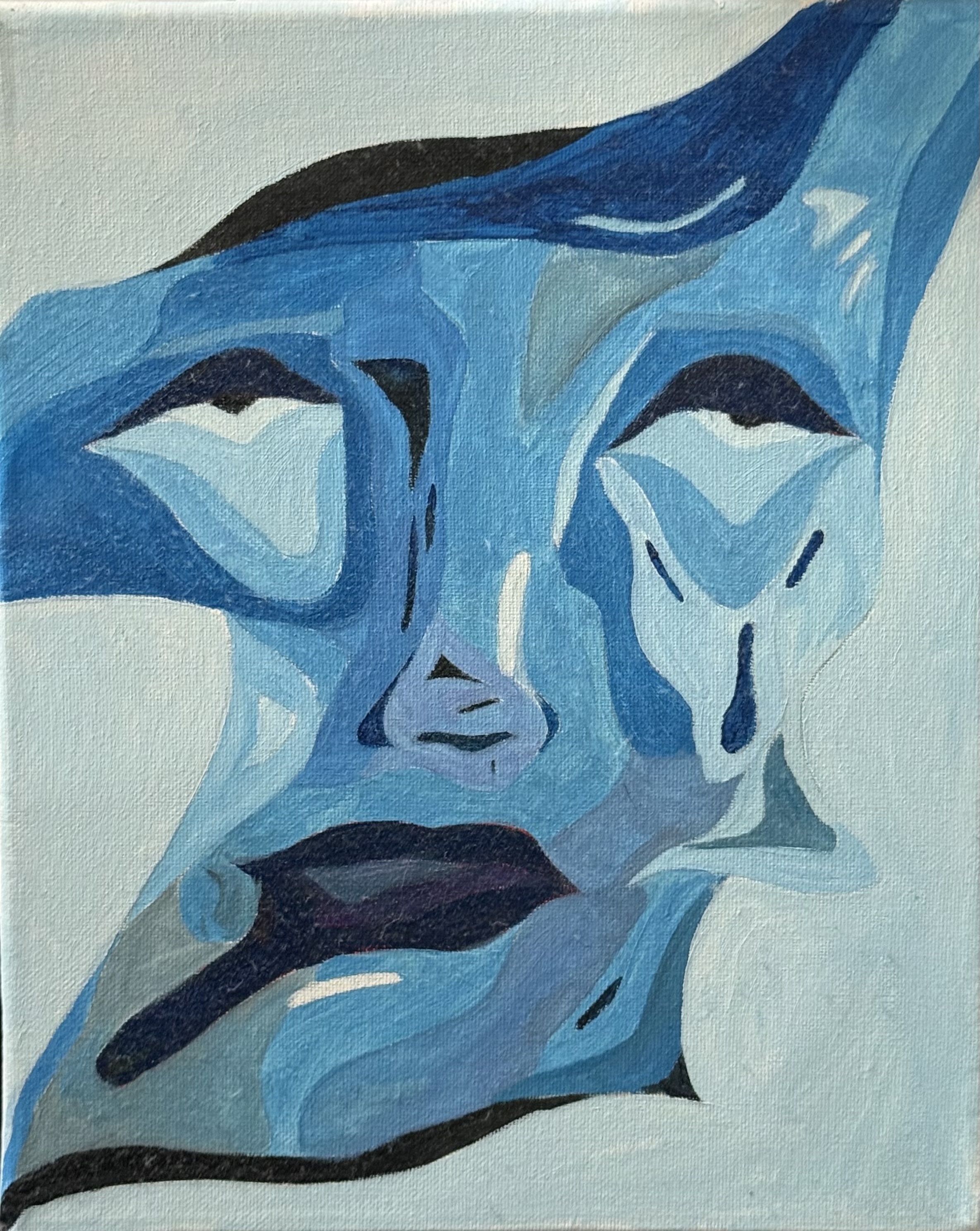
I work across four things that I refuse to rank. Oil painting, pencil studies, retail scenography, and physical installation. The hours aren't even. Some months I'm mostly on my laptop drawing booths in SketchUp; some weeks I'm on a ladder with a fabric swatch in my teeth; some nights I'm painting a blue face at eleven and wondering why it keeps coming back.
A painting taught me about a product display. A product display taught me how much a painting was trying to get away with. — Studio journal, March 2024
I think of the disciplines as a rotation. When the commercial work gets too tidy, the oil paintings pull me out of it. When the oil paintings get too hermetic, a client brief makes me clean the studio and write a plan. Both of them exist in the same pair of hands and get better from each other.
On the commercial side I've worked with furniture and homegoods brands — Möbel Kraft as the steadiest of them, plus Remember®, Actona Group, Maisons du Monde for specific concepts. I design showroom scenes, seasonal dressings, booth systems and single-product displays.
My rule, loosely, is one intrusive choice per scene. The pink lion on the living-room wall. The hot-pink arch behind a glass cabinet. A gnome hidden under a bell jar. A scene without one unreasonable object in it looks like a stock photo.
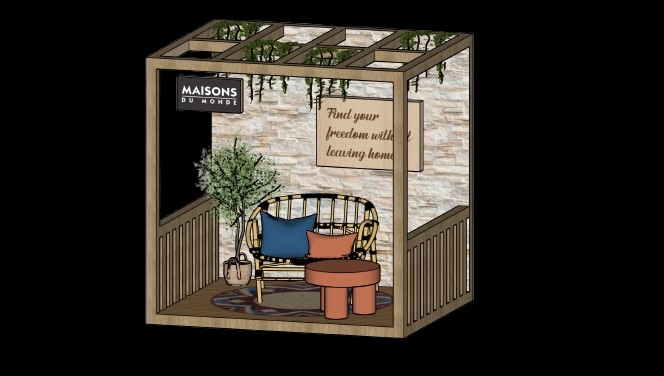
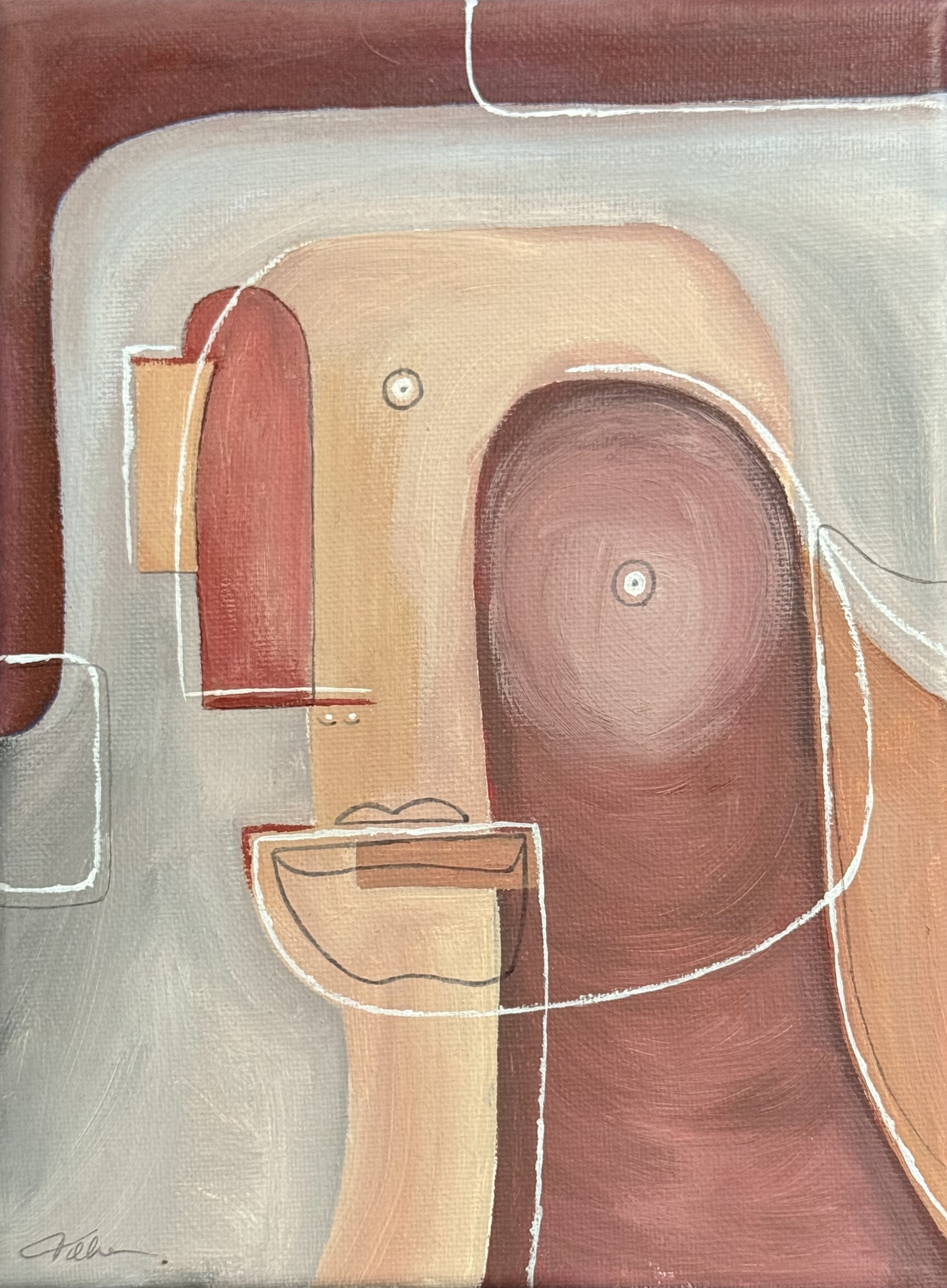
The paintings and sketches are my longest-running habit. I started the sketchbook I still use in 2022. I paint almost exclusively in oil because the medium forgives me — it lets me keep working a face for weeks until the thing under the face shows up.
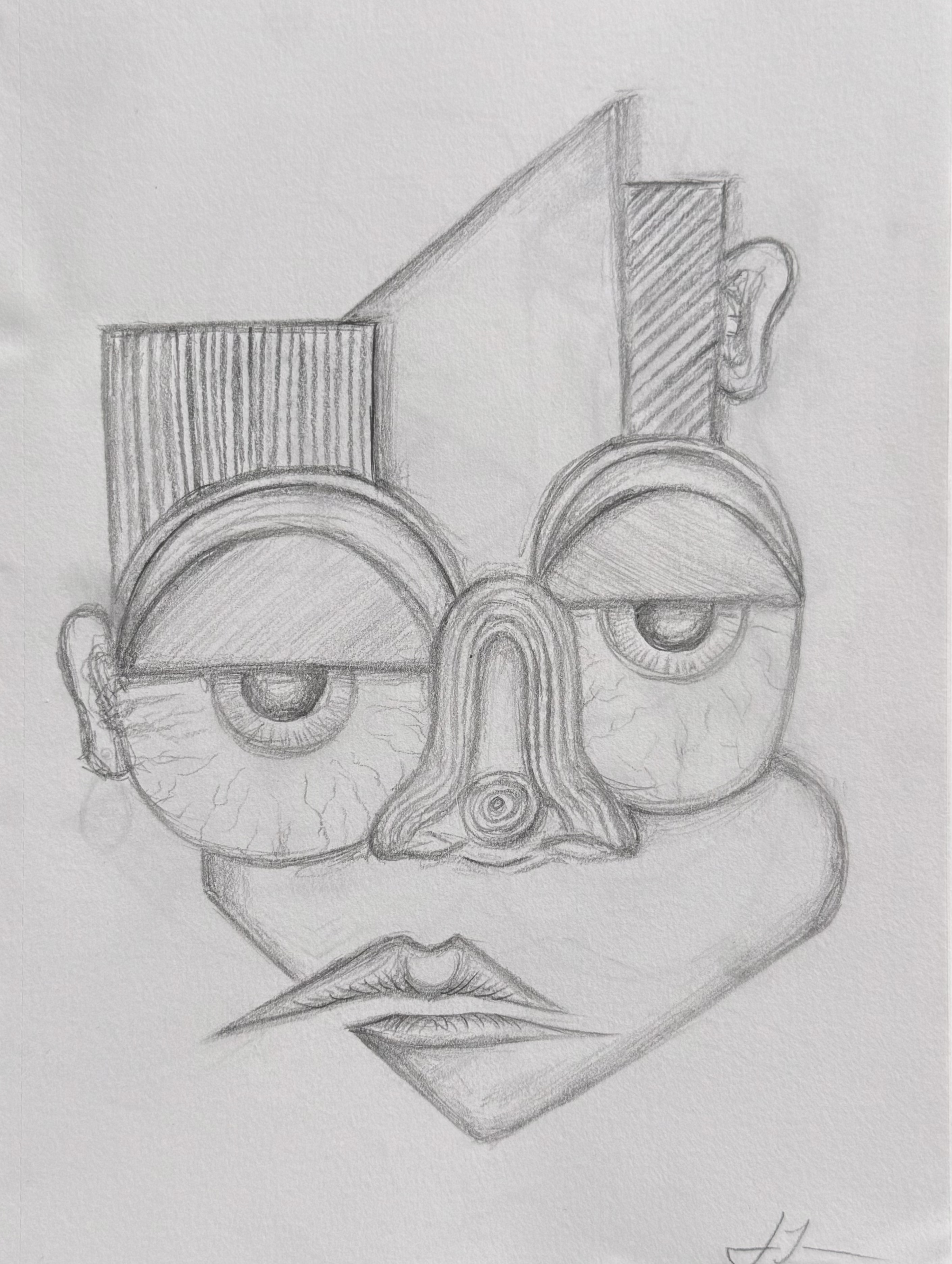
The recurring subject is a face that can't quite hold itself together. Cubist in the pencils, softer in the oils. I used to be embarrassed about painting the same thing over and over. I don't think I am anymore. I think the same thing, painted many times, is the point.
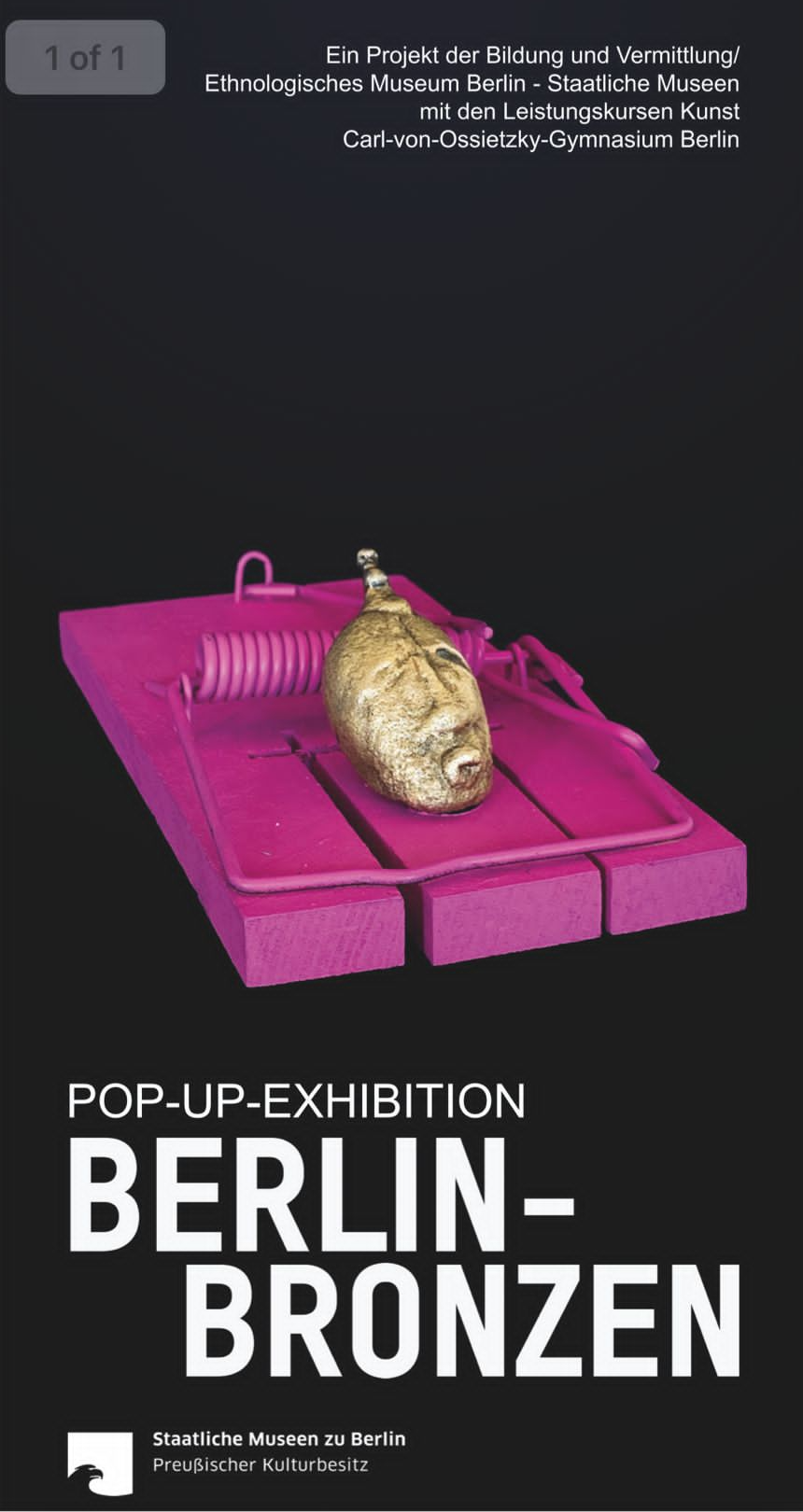
The piece I'm proudest of lives somewhere in the middle of everything. Berlin-Bronzen, a pop-up installation at the Humboldt Forum in 2022 — a cast bronze head placed inside a saturated-pink mousetrap. I developed it with a high-school art course as a response to the restitution conversation around the Benin Bronzes. It was the first time my commercial instincts (staging, colour-as-argument, a single unreasonable object) met my personal ones (a face that isn't whole, a material that remembers) in public.
More hybrid objects. Less single-channel work. I'd like to make a showroom that's also an installation and call it both things honestly. I'd like to paint a larger canvas. I'd like to learn to cast in bronze myself instead of commissioning it.
If any of that sounds like a conversation you'd want to have — write to the studio.
Every scene gets one thing that shouldn't be there. A pink lion. A gold mousetrap. The room earns its stillness from the one loud choice.
Commercial and personal work stay in the same studio. They borrow from each other. They also interrupt each other — that's the point.
If it can live in a room, put it in a room. I don't trust a design I haven't seen next to a human-sized chair.
I'm not trying to paint who a person is. I'm trying to paint the feeling of a person not being finished yet. It's the honest version.